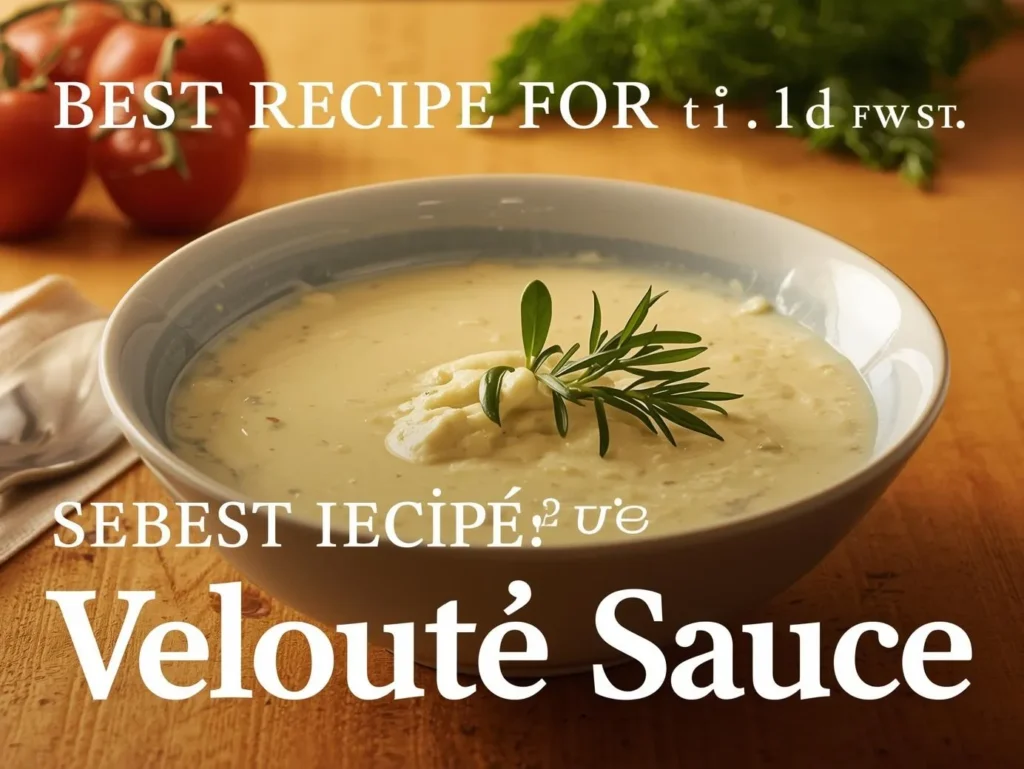
Velouté sauce is one of the great “mother sauces” of French cuisine—a foundation of elegance, refinement, and balance. Its name comes from the French word velours, meaning “velvet,” and that’s exactly what this sauce delivers: a smooth, silky texture that enhances any dish it touches.
Made from a light stock thickened with a butter-and-flour roux, velouté is the essence of subtlety. It’s less rich than béchamel, lighter than hollandaise, and more delicate than gravy. For Christmas, when the table is filled with roasted meats, seafood, and vegetables, velouté sauce offers a refined complement that ties everything together with grace.
This post explores the history, technique, and versatility of velouté sauce, along with a detailed recipe, variations, and festive serving ideas.
The History of Velouté Sauce
Velouté sauce dates back to the golden age of French gastronomy in the 17th century. It was codified by Marie-Antoine Carême, one of the founding figures of classical French cooking, and later refined by Auguste Escoffier, who classified it as one of the five “mother sauces.”
Originally, velouté was made with veal stock, but over time, variations using chicken, fish, or vegetable stock became common. Its purpose was to serve as a base for countless derivative sauces—each one a masterpiece in its own right.
Today, velouté remains a symbol of French culinary artistry. It’s a sauce that demands precision but rewards the cook with elegance and versatility.
Why Velouté Sauce Belongs on the Christmas Table
Christmas cooking is about balance—richness paired with lightness, indulgence balanced by refinement. Velouté sauce embodies that harmony. It’s creamy without being heavy, flavorful without overpowering, and adaptable to almost any dish.
It pairs beautifully with roasted poultry, seafood, and vegetables, making it a perfect addition to a festive menu. Whether served with turkey, chicken, or delicate fish, velouté adds a touch of sophistication that elevates the entire meal.
It’s also a sauce that can be prepared ahead of time, freeing up precious moments on Christmas Day.
Ingredients for the Perfect Velouté Sauce
The beauty of velouté lies in its simplicity. With just a few ingredients, it creates a luxurious texture and subtle flavor that complements rather than competes.
Core Ingredients
- 2 tablespoons (30 g) unsalted butter
- 2 tablespoons (15 g) all-purpose flour
- 2 cups (500 ml) light stock (chicken, fish, or vegetable)
- Salt and white pepper to taste
Optional Enhancements
- A splash of cream for richness
- A pinch of nutmeg for warmth
- A few drops of lemon juice for brightness
- Fresh herbs (parsley, thyme, or tarragon) for aroma
Step-by-Step Recipe for Velouté Sauce
Step 1: Make the Roux
In a medium saucepan, melt the butter over medium heat. Add the flour and whisk continuously for 2–3 minutes until the mixture forms a smooth paste. The roux should remain pale—avoid browning it, as velouté is meant to be light in color and flavor.
Step 2: Add the Stock Gradually
Slowly pour in the warm stock, whisking constantly to prevent lumps. Add the liquid in small increments, allowing each addition to incorporate fully before adding more.
Step 3: Simmer and Thicken
Once all the stock is added, bring the sauce to a gentle simmer. Reduce the heat and cook for 10–15 minutes, stirring occasionally, until the sauce thickens and coats the back of a spoon.
Step 4: Season and Strain
Season with salt and white pepper. For an ultra-smooth texture, strain the sauce through a fine sieve before serving.
Step 5: Finish (Optional)
For a richer version, stir in a splash of cream or a knob of butter just before serving.
The Secret to a Perfect Velouté Sauce
1. Use a light stock: The stock defines the flavor, so choose one that complements your dish—chicken for poultry, fish for seafood, or vegetable for vegetarian meals.
2. Keep the roux pale: A white roux ensures a delicate flavor and color.
3. Whisk constantly: This prevents lumps and creates a smooth texture.
4. Simmer gently: Slow cooking allows the sauce to thicken naturally and develop depth.
5. Strain for elegance: A fine sieve gives the sauce its signature velvety finish.
Variations on the Classic Velouté
Velouté is the foundation for many derivative sauces, each with its own character and charm.
1. Sauce Suprême: Add cream and butter to chicken velouté for a luxurious finish—perfect with roast turkey or chicken.
2. Sauce Allemande: Enrich veal velouté with egg yolks, cream, and lemon juice for a refined, golden sauce.
3. Sauce Bercy: Combine fish velouté with white wine, shallots, and parsley for a bright seafood accompaniment.
4. Sauce Normande: Add cream, butter, and mushroom essence to fish velouté for a rich, festive flavor.
5. Herb Velouté: Infuse the sauce with fresh herbs for a fragrant, green variation ideal for vegetables.
Pairing Ideas for Christmas
1. Poultry Dishes:
- Roast turkey or chicken with velouté sauce and herbs.
- Stuffed chicken breasts with creamy velouté drizzle.
- Turkey roulades with mushroom velouté.
2. Seafood Dishes:
- Poached salmon or cod with lemon velouté.
- Scallops or shrimp served with a light fish velouté.
- Lobster medallions with a touch of cream-enriched velouté.
3. Vegetable Dishes:
- Steamed asparagus or broccoli topped with herb velouté.
- Cauliflower gratin with velouté base.
- Roasted root vegetables with a drizzle of velouté for elegance.
4. Pasta and Grains:
- Velouté tossed with tagliatelle and mushrooms.
- Risotto finished with a spoonful of velouté for creaminess.
Presentation for Christmas
For a festive presentation, serve velouté sauce in a small porcelain sauceboat or drizzle it artistically over the plate. Its pale, glossy texture adds a touch of refinement to any dish.
Garnish with fresh herbs, a sprinkle of nutmeg, or a few drops of truffle oil for a luxurious finish. When serving with poultry or seafood, pair with colorful sides—roasted carrots, green beans, or cranberry relish—to create a visually stunning plate.
Make-Ahead and Storage Tips
1. Prepare in advance: Velouté can be made up to two days ahead.
2. Refrigerate: Store in an airtight container with plastic wrap pressed directly onto the surface to prevent a skin from forming.
3. Reheat gently: Warm over low heat, whisking constantly. Add a splash of stock if the sauce thickens too much.
4. Freeze: Velouté freezes well for up to one month. Thaw overnight in the refrigerator and reheat gently.
Nutritional Benefits
Velouté sauce, while indulgent, is lighter than cream-based sauces.
- Protein: Derived from the stock, especially if made with chicken or fish.
- Calcium: A small amount from butter and flour.
- Lower fat: Compared to béchamel or hollandaise, velouté is less heavy, making it ideal for balanced festive meals.
For a lighter version, use vegetable stock and reduce the butter slightly.
Troubleshooting Common Issues
1. Sauce too thin: Simmer longer to reduce or add a small amount of roux.
2. Sauce too thick: Whisk in a bit more warm stock.
3. Lumpy texture: Strain through a fine sieve or blend briefly.
4. Sauce lacks flavor: Use a well-seasoned stock and finish with a touch of salt or lemon juice.
Why This Recipe Stands Out
This velouté sauce stands out for its elegance and versatility. It’s a sauce that enhances rather than dominates, allowing the main ingredients to shine. Its light, silky texture and subtle flavor make it a perfect companion for Christmas dishes, from roasted poultry to delicate seafood.
It’s also a sauce that embodies the art of French cooking—simple ingredients transformed through technique into something extraordinary. The process of whisking, simmering, and refining the sauce is both meditative and rewarding, a reminder that great cooking is about care and precision.
The Spirit of Christmas in Every Spoonful
Christmas cooking is about warmth, generosity, and refinement, and velouté sauce captures all three. Its smooth texture and gentle flavor bring harmony to the table, tying together the diverse elements of a festive meal.
The act of preparing velouté—stirring patiently, tasting, adjusting—reflects the spirit of the season: taking time to create something beautiful for others. It’s a sauce that speaks of tradition, craftsmanship, and love.
Conclusion
The velouté sauce is a timeless classic that deserves a place in every Christmas kitchen. With its light, velvety texture and delicate flavor, it elevates any dish to a level of elegance and sophistication.
Whether served with poultry, seafood, or vegetables, velouté adds refinement and warmth to the holiday table. It’s a recipe that celebrates the beauty of simplicity and the joy of sharing good food.
This Christmas, let the smooth, golden sheen of velouté sauce grace the table. Serve it with pride, knowing that every spoonful carries the essence of tradition, care, and festive elegance.