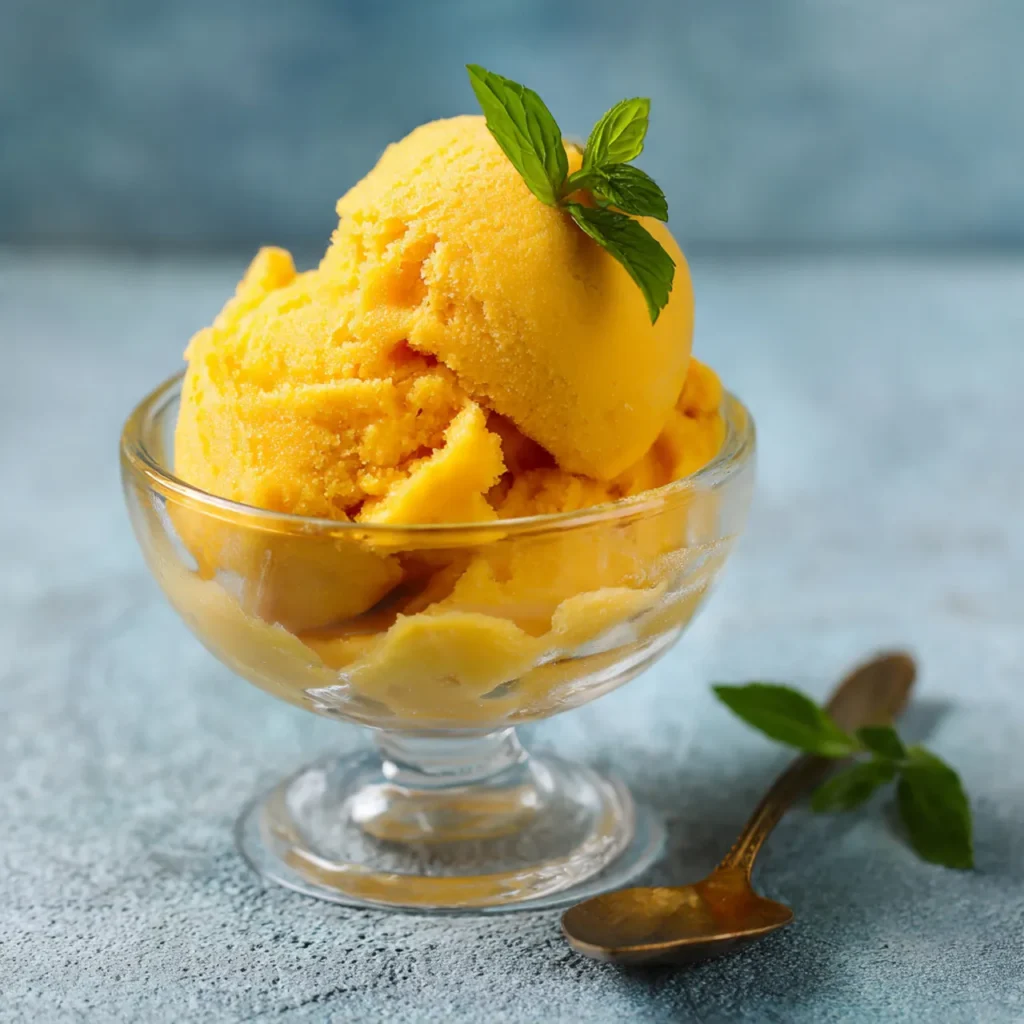
Mango sorbet is the ultimate tropical dessert—smooth, refreshing, and naturally sweet. Made with ripe mangoes, a touch of sugar, and a hint of lime, it captures the essence of summer in every spoonful. Unlike ice cream, sorbet contains no dairy, making it light, vegan-friendly, and intensely fruity. The texture is silky and luscious, while the flavor is pure mango—bright, tangy, and irresistibly fresh. Whether served as a palate cleanser, a light dessert, or a cooling treat on a hot day, mango sorbet is a celebration of simplicity and natural sweetness.
The Essence of Mango Sorbet
Mango sorbet is all about the fruit. The key to perfection lies in using ripe, juicy mangoes that are naturally sweet and aromatic. The fruit’s natural sugars and fibers create a creamy texture without the need for cream or eggs. A touch of lime juice enhances the flavor, balancing the sweetness with a hint of acidity. The result is a dessert that’s both refreshing and indulgent, with a texture so smooth it melts on the tongue.
The History of Sorbet
Sorbet has ancient origins, dating back to Persia and ancient China, where fruit juices were mixed with snow to create early frozen desserts. The concept spread to Europe, where it evolved into the refined sorbets served at royal banquets. Mango sorbet, inspired by tropical fruits from Asia and South America, became a favorite for its vibrant color and exotic flavor. Today, it’s a staple in both gourmet restaurants and home kitchens, loved for its simplicity and elegance.
Choosing the Right Ingredients
The beauty of mango sorbet lies in its minimalism. With only a few ingredients, quality is everything.
Mangoes
The star of the recipe. Choose ripe mangoes that are fragrant, slightly soft, and deep orange in color. Varieties like Alphonso, Ataulfo, or Kent are ideal for their sweetness and smooth texture.
Sugar
Sugar enhances the natural sweetness of the mangoes and helps achieve a smooth texture by lowering the freezing point.
Lime Juice
A small amount of lime juice brightens the flavor and prevents the sorbet from tasting overly sweet.
Water
Water helps blend the ingredients and ensures the right consistency.
Optional Additions
A pinch of salt enhances the flavor, while a splash of rum or vodka can prevent the sorbet from freezing too hard.
Ingredients for Mango Sorbet
- 3 large ripe mangoes (about 2 ½ cups of puree)
- ½ cup granulated sugar
- ½ cup water
- 1 tablespoon lime juice
- Pinch of salt
- 1 tablespoon light corn syrup or 1 teaspoon vodka (optional, for texture)
Step-by-Step Preparation
- Prepare the Mangoes: Peel and dice the mangoes, removing the pit. Place the pieces in a blender or food processor.
- Make the Syrup: In a small saucepan, combine sugar and water. Heat gently until the sugar dissolves completely. Remove from heat and let cool.
- Blend the Mixture: Add the cooled syrup, lime juice, and salt to the blender with the mangoes. Blend until completely smooth. For an ultra-smooth texture, strain the puree through a fine sieve.
- Chill the Mixture: Cover and refrigerate for at least 2 hours, or until thoroughly chilled.
- Churn the Sorbet: Pour the chilled mixture into an ice cream maker and churn according to the manufacturer’s instructions, usually 20–25 minutes, until it reaches a soft, slushy consistency.
- Freeze: Transfer the sorbet to an airtight container and freeze for at least 4 hours before serving.
The Science of Smoothness
The secret to smooth sorbet lies in controlling ice crystal formation. Sugar and fruit puree lower the freezing point, preventing large crystals from forming. Churning incorporates air, creating a light, scoopable texture. The natural pectin in mangoes also contributes to creaminess, making this sorbet rich and velvety without any dairy.
Variations and Add-Ins
Mango sorbet is wonderfully versatile. Try these variations for a creative twist:
- Mango Coconut Sorbet: Replace half the water with coconut milk for a tropical creaminess.
- Mango Passion Fruit Sorbet: Add passion fruit puree for a tangy, exotic flavor.
- Spiced Mango Sorbet: Add a pinch of chili powder or ginger for a subtle kick.
- Mango Mint Sorbet: Blend in a few fresh mint leaves for a refreshing twist.
- Mango Lime Swirl: Swirl in extra lime zest before freezing for a zesty finish.
Serving Suggestions
Mango sorbet is as versatile as it is delicious.
- As a Dessert: Serve in chilled bowls or martini glasses for an elegant presentation.
- With Fresh Fruit: Pair with pineapple, berries, or kiwi for a colorful fruit plate.
- As a Palate Cleanser: Serve between courses at a dinner party.
- In a Float: Add a scoop to sparkling water or prosecco for a refreshing drink.
- With Coconut: Sprinkle toasted coconut flakes on top for added texture.
Tips for Perfect Homemade Sorbet
- Use Ripe Mangoes: The riper the fruit, the sweeter and more flavorful the sorbet.
- Chill Thoroughly: A cold base ensures faster churning and smaller ice crystals.
- Don’t Overfreeze: Sorbet should be firm but scoopable.
- Add a Touch of Alcohol: A small amount of vodka or rum prevents the sorbet from freezing too hard.
- Store Properly: Keep in an airtight container to prevent ice crystals.
The Role of Mango in Flavor
Mangoes are naturally rich in sugars, fiber, and aromatic compounds that make them ideal for frozen desserts. Their tropical sweetness pairs beautifully with citrus, coconut, and spices. The fruit’s vibrant color and smooth texture make mango sorbet as visually appealing as it is delicious.
Nutritional Information (per serving)
- Calories: 150 kcal
- Fat: 0 g
- Carbohydrates: 38 g
- Protein: 1 g
- Sugar: 34 g
Troubleshooting Common Issues
- Sorbet Too Hard: Add a bit more sugar or a teaspoon of alcohol to soften the texture.
- Icy Texture: The mixture wasn’t chilled enough before churning.
- Too Sweet: Add more lime juice to balance the flavor.
- Too Tart: Increase the sugar slightly or use riper mangoes.
The Joy of Homemade Sorbet
Making mango sorbet at home is a rewarding experience. The aroma of ripe mangoes, the vibrant golden color, and the anticipation as it churns all contribute to the pleasure of creating something from scratch. Each spoonful reflects the freshness of the fruit and the care put into the process. It’s a dessert that feels both luxurious and wholesome, perfect for any occasion.
The Cultural Appeal of Mango Sorbet
Mango sorbet is beloved across cultures. In India, mangoes are celebrated as the “king of fruits,” and mango-based desserts are a staple of summer. In Latin America and Southeast Asia, mango sorbet is enjoyed as a refreshing street treat. Its universal appeal lies in its simplicity—just fruit, sugar, and a touch of citrus, transformed into something extraordinary.
Sustainability and Ingredient Sourcing
Choosing sustainably grown mangoes supports ethical farming and reduces environmental impact. Buying local or fair-trade fruit ensures freshness and fair wages for farmers. Using organic sugar and avoiding artificial additives keeps the dessert pure and natural.
Modern Twists on a Classic
Chefs and home cooks have reimagined mango sorbet in creative ways. Some add herbs like basil or lemongrass for a sophisticated twist, while others pair it with spicy or savory elements like chili or sea salt. It can also be layered with other sorbets—such as raspberry or coconut—for a colorful, multi-flavored dessert.
Pairing with Beverages
Mango sorbet pairs beautifully with a variety of drinks.
- With Sparkling Wine: The bubbles enhance the fruit’s brightness.
- With Coconut Water: A hydrating and tropical combination.
- With Rum: A Caribbean-inspired pairing.
- With Green Tea: The earthy notes of tea balance the sweetness.
The Timeless Appeal
Mango sorbet’s enduring popularity lies in its balance of freshness and indulgence. It’s light yet satisfying, simple yet elegant. Its vibrant color and tropical flavor make it a favorite for summer gatherings, dinner parties, or quiet moments of self-indulgence.
Conclusion
Mango sorbet is a celebration of tropical flavor and natural sweetness. With its smooth texture, bright color, and pure fruit taste, it captures the essence of summer in every bite. Making it at home allows for creativity, quality, and connection to the ingredients. Whether enjoyed on its own, paired with fruit, or served as a refreshing finish to a meal, mango sorbet remains a timeless dessert—simple, elegant, and irresistibly delicious.