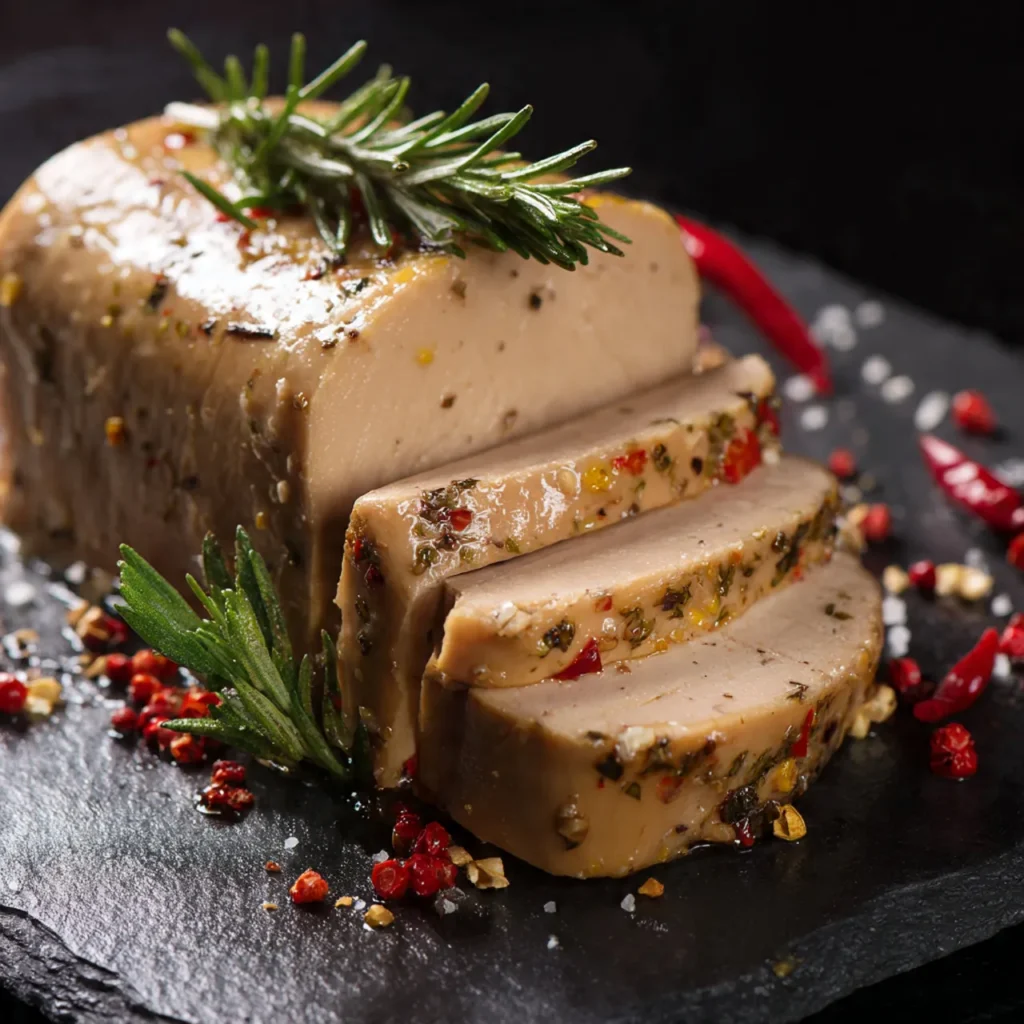
Semi-cooked foie gras with pepper, prepared as a terrine, is one of the most refined and traditional dishes of French festive cuisine. Its smooth texture, delicate flavor, and subtle seasoning make it a luxurious starter for Christmas or New Year’s Eve. The gentle cooking method preserves the foie gras’s natural richness while enhancing it with the warmth of freshly ground pepper and a hint of sweetness from the curing process.
This recipe captures the essence of French gastronomy—simple ingredients, precise technique, and an elegant result. Served with toasted brioche or rustic bread and a touch of fig or onion chutney, it’s a dish that transforms any meal into a celebration.
The Essence of Semi-Cooked Foie Gras
“Foie gras mi-cuit,” or semi-cooked foie gras, is a delicacy that’s lightly cooked at a low temperature, usually between 60°C and 70°C (140°F–160°F). This method keeps the foie gras tender and creamy, with a melt-in-the-mouth texture that’s distinct from fully cooked or pan-seared versions.
The addition of pepper enhances the foie gras’s natural sweetness and depth, creating a perfect balance of flavors. The terrine format allows for easy slicing and elegant presentation, making it ideal for festive tables.
Ingredients for Semi-Cooked Foie Gras Terrine with Pepper
- 1 whole raw duck foie gras (about 500–600 g / 1.1–1.3 lbs)
- 8 g fine salt
- 2 g freshly ground black pepper
- 1 g sugar
- 1 tablespoon Armagnac or Cognac
- 1 tablespoon Port wine (optional)
Equipment
- Terrine mold (about 500 ml capacity)
- Food thermometer
- Fine sieve or cheesecloth
- Plastic wrap and aluminum foil
Step 1: Preparing the Foie Gras
Remove the foie gras from the refrigerator 30 minutes before starting. It should be supple but still cool to the touch. Separate the two lobes carefully.
Using a small knife or the back of a spoon, gently remove the veins and membranes. Work slowly to avoid breaking the lobes too much. This step ensures a smooth texture once cooked.
Step 2: Seasoning
In a small bowl, mix the salt, pepper, and sugar. Sprinkle this mixture evenly over both sides of the foie gras. Drizzle with Armagnac and Port wine, then gently massage the seasoning into the meat.
Place the seasoned foie gras in a dish, cover with plastic wrap, and refrigerate for 12 hours to allow the flavors to develop.
Step 3: Assembling the Terrine
Remove the foie gras from the refrigerator and let it come to room temperature for about 30 minutes. Line the terrine mold with plastic wrap, leaving enough overhang to cover the top later.
Arrange the larger lobe at the bottom of the mold, pressing gently to fill any gaps. Place the smaller lobe on top, pressing again to compact the mixture. Fold the plastic wrap over the top to seal.
Step 4: Cooking the Foie Gras
Preheat the oven to 120°C (250°F). Place the terrine in a deep baking dish and pour hot water around it to create a bain-marie. The water should reach halfway up the sides of the terrine.
Cook for 40–45 minutes, or until the internal temperature reaches 55°C (130°F) for a semi-cooked texture. Use a thermometer for accuracy.
Once cooked, remove the terrine from the bain-marie and let it cool at room temperature for 30 minutes.
Step 5: Pressing and Resting
When the terrine is still slightly warm, place a small weight on top (a piece of cardboard wrapped in foil works well) to press it gently. This helps compact the foie gras and release excess fat.
Refrigerate for at least 24 hours before serving. The foie gras will firm up and the flavors will harmonize beautifully.
Step 6: Serving the Terrine
Before serving, remove the terrine from the refrigerator and let it sit at room temperature for 20 minutes. This allows the foie gras to soften slightly for the perfect texture.
Unmold carefully by lifting the plastic wrap. Slice with a knife dipped in hot water and wiped dry between each cut for clean, smooth slices.
Serve with toasted brioche, country bread, or gingerbread. Add a small spoonful of fig chutney, onion confit, or a touch of fleur de sel for contrast.
Flavor Profile and Texture
This semi-cooked foie gras terrine is silky, rich, and delicately seasoned. The pepper adds a gentle warmth that enhances the foie gras’s buttery flavor without overpowering it. The Armagnac and Port bring subtle sweetness and depth, while the slow cooking preserves the foie gras’s luxurious creaminess.
Each slice melts on the tongue, releasing layers of flavor—earthy, sweet, and slightly spicy. It’s a dish that feels indulgent yet perfectly balanced.
Tips for Success
1. Choose quality foie gras: Opt for a fresh, Grade A foie gras for the best texture and flavor.
2. Handle gently: Avoid overworking the foie gras to maintain its smooth consistency.
3. Monitor temperature: Precision is key—too high and it will lose fat; too low and it won’t set properly.
4. Rest before serving: The flavor improves after 24–48 hours in the refrigerator.
5. Serve at the right temperature: Slightly cool but not cold, to appreciate its full aroma.
Variations and Creative Twists
1. Foie Gras with Spices: Add a pinch of cinnamon, nutmeg, or allspice for a festive touch.
2. Gras with Truffle: Insert thin slices of black truffle between the lobes before cooking.
3. Gras with Wine Reduction: Serve with a red wine or Sauternes reduction for a gourmet pairing.
4. Gras with Fruit: Add a layer of dried figs or apricots in the terrine for a sweet contrast.
5. Gras au Naturel: Skip the alcohol for a purer, more delicate flavor.
Pairing Ideas
Accompaniments:
- Toasted brioche or rustic bread
- Fig or onion chutney
- Apple or pear compote
- Fleur de sel and cracked pepper
Wine Pairings:
- Sauternes or Monbazillac for a classic sweet pairing
- Champagne for a festive touch
- A late-harvest Riesling or Gewurztraminer for aromatic balance
Presentation for Christmas
For a festive presentation, serve the foie gras slices on a slate or porcelain platter. Garnish with a few pink peppercorns, microgreens, or a drizzle of balsamic reduction. Add toasted brioche triangles and small ramekins of chutney for an elegant touch.
The golden hue of the foie gras and the glistening fat make it visually stunning, while the aroma of pepper and Armagnac evokes the warmth of the holidays.
Leftover Ideas
Leftover foie gras can be used in creative ways:
- Foie Gras Toasts: Spread on warm toast with a drizzle of honey.
- Foie Gras Pasta: Melt small pieces into a cream sauce for a luxurious pasta dish.
- Foie Gras Risotto: Stir into risotto at the end of cooking for richness.
- Foie Gras Parfait: Blend with butter and chill for a smooth spread.
Nutritional Information (per serving, approximate)
- Calories: 420 kcal
- Protein: 8 g
- Fat: 40 g
- Carbohydrates: 2 g
- Sugar: 1 g
- Sodium: 400 mg
This dish is rich and indulgent, meant to be enjoyed in small portions as part of a festive meal.
The Spirit of Christmas in Every Bite
Semi-cooked foie gras terrine with pepper embodies the elegance and generosity of Christmas dining. Its smooth texture, delicate seasoning, and luxurious flavor make it a symbol of celebration and refinement.
It’s a dish that invites sharing and appreciation—a moment of indulgence that brings warmth and sophistication to the holiday table. Whether served as a starter or part of a festive buffet, it captures the essence of French culinary tradition and the joy of the season.
Make-Ahead and Storage Tips
1. Prepare in advance: The terrine can be made up to 3 days before serving.
2. Store properly: Keep tightly wrapped in plastic and foil in the refrigerator.
3. Serve within a week: Semi-cooked foie gras is best enjoyed within 7 days.
4. Freeze for later: Wrap tightly and freeze for up to 2 months. Thaw slowly in the refrigerator.
Troubleshooting Common Issues
1. Too much fat loss: Oven temperature was too high—keep it low and steady.
2. Foie gras too firm: Overcooked—reduce cooking time next time.
3. Uneven texture: Ensure even pressing and resting time.
4. Bland flavor: Increase seasoning slightly or use freshly ground pepper.
Why This Recipe Stands Out
This semi-cooked foie gras terrine stands out for its simplicity, precision, and elegance. The pepper enhances the foie gras’s natural richness, while the gentle cooking preserves its luxurious texture. It’s a dish that feels timeless yet festive, perfect for those who appreciate fine dining at home.
It’s not just a recipe—it’s a ritual of care and craftsmanship, a way to bring a touch of French sophistication to the Christmas table.
Conclusion
The semi-cooked foie gras terrine with pepper is a masterpiece of flavor and texture—silky, aromatic, and perfectly balanced. With its delicate seasoning and luxurious mouthfeel, it embodies the spirit of festive dining: elegance, indulgence, and joy.
This recipe proves that true sophistication lies in simplicity and precision. Whether served with brioche and chutney or enjoyed on its own, it’s a dish that transforms any meal into a celebration.
From the first slice to the last, this foie gras terrine captures the essence of Christmas—warmth, refinement, and the pleasure of sharing something truly exceptional.