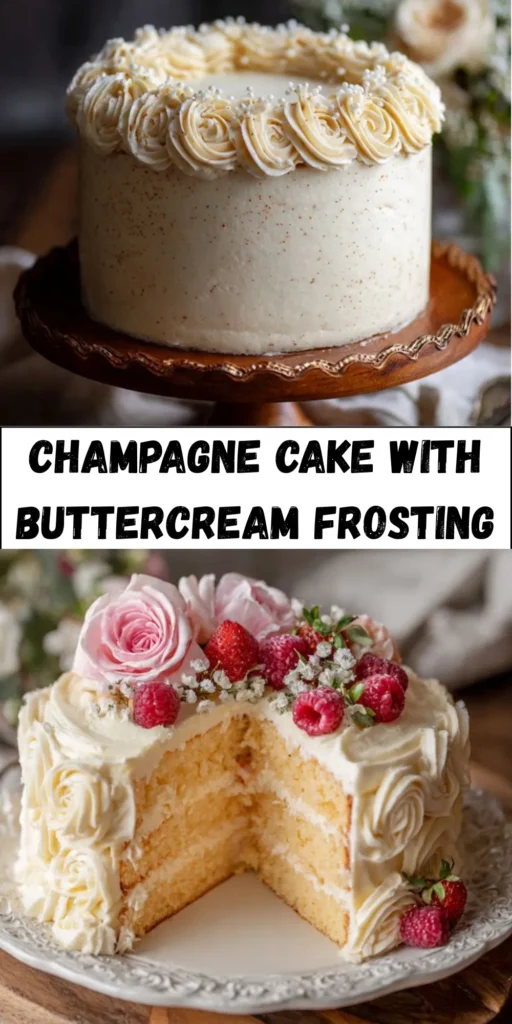
Champagne cake with buttercream frosting is the epitome of celebration in dessert form. Light, moist, and delicately flavored with sparkling wine, this cake captures the essence of elegance and festivity. The subtle notes of champagne add sophistication, while the creamy buttercream frosting provides a rich, velvety finish. Perfect for weddings, anniversaries, New Year’s Eve, or any special occasion, this cake is both visually stunning and irresistibly delicious.
The Charm of Champagne Cake
Champagne cake is a modern classic that combines the airy texture of a sponge cake with the refined flavor of sparkling wine. The champagne not only enhances the taste but also contributes to the cake’s lightness, thanks to its natural effervescence. The result is a dessert that feels luxurious yet approachable — a perfect centerpiece for any celebration.
Ingredients for Champagne Cake with Buttercream Frosting
For the Cake:
- 2 ½ cups (310 g) all-purpose flour
- 2 ½ tsp baking powder
- ½ tsp salt
- ¾ cup (170 g) unsalted butter, softened
- 1 ¾ cups (350 g) granulated sugar
- 4 large egg whites, room temperature
- 1 tsp vanilla extract
- 1 cup (240 ml) champagne or sparkling wine
- ½ cup (120 ml) whole milk
For the Champagne Buttercream Frosting:
- 1 cup (230 g) unsalted butter, softened
- 4 cups (480 g) powdered sugar, sifted
- ¼ cup (60 ml) champagne
- 1 tsp vanilla extract
- Pinch of salt
Optional Garnishes:
- Edible gold leaf
- Fresh berries
- White chocolate curls
- Sparkling sugar
Step 1: Prepare the Cake Batter
Preheat the oven to 175°C (350°F). Grease and line two 8-inch round cake pans with parchment paper. In a medium bowl, whisk together flour, baking powder, and salt. In a large mixing bowl, beat the butter and sugar until light and fluffy, about 3 minutes. Add the egg whites one at a time, beating well after each addition. Stir in the vanilla extract.
In a separate bowl, combine champagne and milk. Alternate adding the dry ingredients and the champagne mixture to the butter mixture, beginning and ending with the dry ingredients. Mix on low speed until just combined. The batter should be smooth and slightly bubbly from the champagne.
Step 2: Bake the Cake
Divide the batter evenly between the prepared pans and smooth the tops. Bake for 25–30 minutes, or until a toothpick inserted in the center comes out clean. The cakes should be lightly golden and springy to the touch. Allow them to cool in the pans for 10 minutes, then transfer to a wire rack to cool completely.
Step 3: Prepare the Champagne Buttercream Frosting
In a large bowl, beat the softened butter until creamy and pale. Gradually add the powdered sugar, one cup at a time, mixing on low speed. Pour in the champagne and vanilla extract, then increase the speed to medium-high and beat for 3–4 minutes until the frosting is light and fluffy. Add a pinch of salt to balance the sweetness. If the frosting is too thick, add a tablespoon of champagne or milk; if too thin, add more powdered sugar.
Step 4: Assemble the Cake
Place one cake layer on a serving plate or cake stand. Spread a generous layer of buttercream over the top. Place the second layer on top and frost the entire cake with a thin crumb coat. Chill for 20 minutes to set, then apply the final layer of buttercream, smoothing it with an offset spatula for a clean finish. Decorate with edible gold leaf, berries, or sparkling sugar for a festive touch.
Flavor and Texture
This champagne cake is light, moist, and delicately flavored. The champagne adds a subtle fruitiness and a hint of acidity that balances the sweetness of the buttercream. The crumb is tender and airy, while the frosting is rich and creamy, creating a perfect harmony of textures. The result is a cake that feels indulgent yet refreshing, ideal for celebrations.
Variations and Customizations
1. Strawberry Champagne Cake: Add ½ cup of pureed strawberries to the batter for a fruity twist.
2. Rosé Champagne Cake: Use rosé champagne for a blush-colored cake with floral notes.
3. Chocolate Champagne Cake: Replace ½ cup of flour with cocoa powder for a decadent variation.
4. Champagne Cupcakes: Divide the batter into cupcake liners and bake for 18–20 minutes.
5. Champagne Drizzle: Brush the cake layers with a champagne syrup for extra flavor.
Perfect Pairings
Champagne cake pairs beautifully with light, celebratory beverages and accompaniments.
1. Champagne or Sparkling Wine: Enhances the cake’s flavor and theme.
2. Fresh Berries: Add color and freshness to each slice.
3. White Chocolate Shavings: Complement the buttery frosting.
4. Vanilla Ice Cream: Adds a creamy contrast.
5. Espresso: Balances the sweetness with a touch of bitterness.
Nutritional Information (per slice, approximately 1/12 of the cake)**
- Calories: 420
- Fat: 22 g
- Carbohydrates: 50 g
- Protein: 4 g
- Sugars: 38 g
This dessert is rich and celebratory, best enjoyed in moderation as part of a festive meal.
Tips for Success
1. Use Room Temperature Ingredients: Ensures a smooth, even batter.
2. Don’t Overmix: Overmixing can make the cake dense.
3. Measure Champagne Carefully: Too much liquid can affect the texture.
4. Cool Completely Before Frosting: Prevents the buttercream from melting.
5. Chill Before Serving: Enhances flavor and makes slicing easier.
Storage and Make-Ahead Instructions
To Store: Keep the frosted cake covered in the refrigerator for up to 4 days.
To Freeze: Wrap unfrosted cake layers tightly and freeze for up to 2 months. Thaw overnight before frosting.
To Serve: Bring to room temperature 30 minutes before serving for the best texture.
Serving Ideas
Champagne cake can be presented in many elegant ways.
1. Layered Celebration Cake: Decorate with gold accents and serve as a centerpiece.
2. Mini Champagne Cakes: Bake in small molds for individual servings.
3. Naked Cake Style: Leave the sides partially exposed for a rustic look.
4. Champagne Trifle: Layer cubes of cake with whipped cream and berries.
5. Cupcake Tower: Perfect for weddings or parties.
The Science Behind Champagne Cake
The bubbles in champagne act as a natural leavening agent, helping the cake rise and stay light. The acidity of the champagne also tenderizes the crumb, resulting in a moist texture. The alcohol evaporates during baking, leaving behind subtle fruity and floral notes. When combined with butter and sugar, champagne enhances the overall flavor complexity, making the cake taste refined and balanced.
Why Champagne Cake Is Perfect for Celebrations
Champagne cake embodies the spirit of celebration. Its delicate flavor, elegant appearance, and luxurious texture make it ideal for marking special moments. The use of champagne adds a touch of sophistication, while the buttercream frosting provides comfort and indulgence. It’s a dessert that feels festive yet timeless, suitable for birthdays, weddings, anniversaries, or any occasion worth toasting.
Common Mistakes to Avoid
1. Using Flat Champagne: Freshly opened champagne ensures the best flavor and texture.
2. Overbaking: Leads to a dry cake. Check for doneness early.
3. Frosting Warm Cake: Causes the buttercream to melt.
4. Skipping the Crumb Coat: Results in uneven frosting.
5. Using Too Much Sugar in Frosting: Balance sweetness with a pinch of salt.
A Dessert That Defines Elegance and Joy
Champagne cake with buttercream frosting is more than just a dessert — it’s a celebration in every bite. The light, airy crumb infused with champagne pairs beautifully with the creamy, rich frosting, creating a dessert that’s both sophisticated and comforting. Its subtle sparkle and luxurious flavor make it the perfect choice for life’s most memorable moments.
Conclusion
Champagne cake with buttercream frosting is a dessert that captures the essence of celebration. With its moist, fluffy texture, delicate champagne flavor, and smooth buttercream finish, it’s both elegant and indulgent. Easy to prepare yet impressive to serve, it’s ideal for any festive occasion. Each slice offers a taste of joy, luxury, and sophistication — a sweet reminder that every celebration deserves a touch of sparkle.