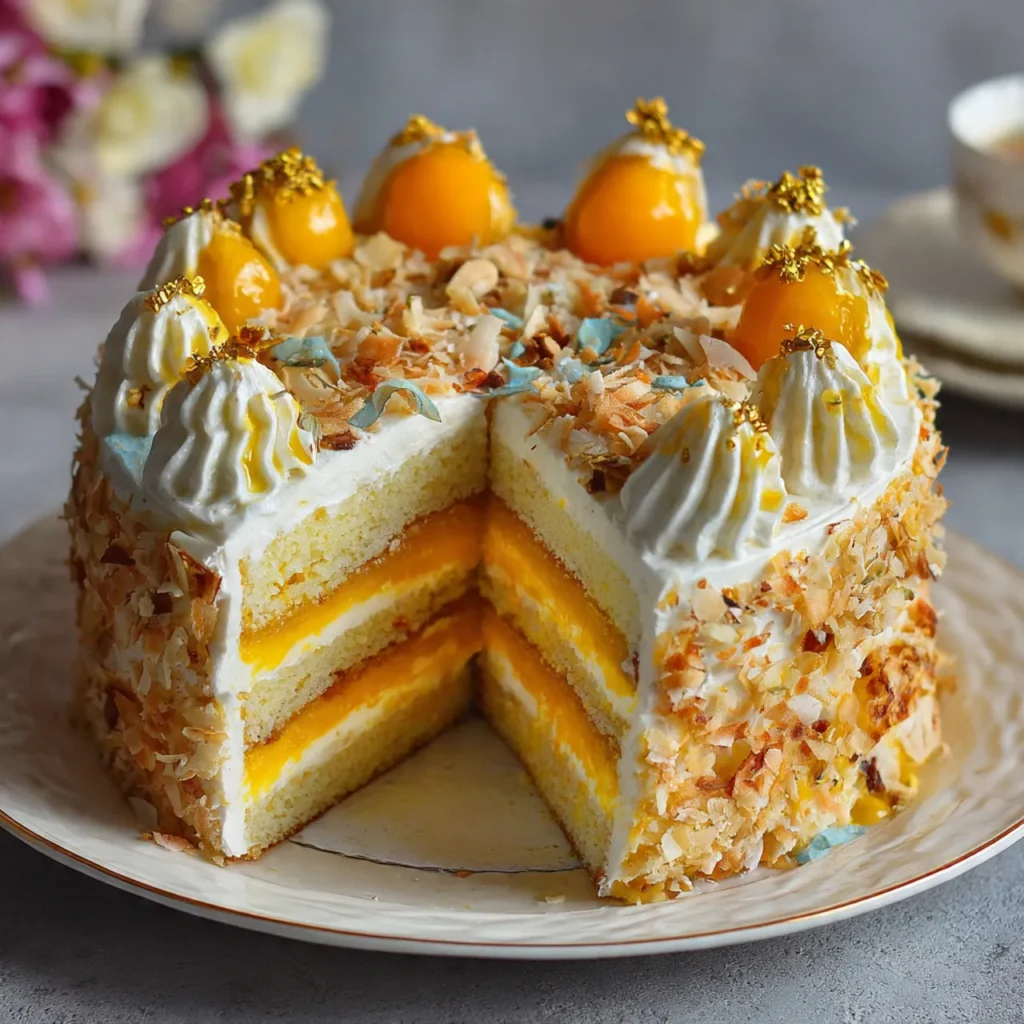
The Mango Coconut New Year Cake is a tropical masterpiece that brings sunshine and joy to any celebration. With its soft coconut sponge, luscious mango filling, and creamy frosting, this cake is a refreshing twist on traditional holiday desserts. The combination of sweet mango and fragrant coconut creates a flavor harmony that feels light, exotic, and festive—perfect for welcoming a new year full of brightness and warmth. This cake is not only visually stunning but also irresistibly delicious, making it the ideal centerpiece for New Year’s Eve or New Year’s Day gatherings.
The Allure of Mango and Coconut
Mango and coconut are a match made in tropical heaven. The creamy sweetness of coconut complements the juicy, tangy flavor of mango, creating a dessert that’s both rich and refreshing. Mango adds a burst of color and natural sweetness, while coconut provides texture and aroma. Together, they evoke the feeling of summer and celebration, making this cake a perfect choice for festive occasions. The tropical flavors also symbolize abundance, joy, and renewal—fitting themes for the New Year.
Ingredients for the Perfect Mango Coconut New Year Cake
For the Coconut Sponge Cake:
- 2 ½ cups all-purpose flour
- 2 ½ teaspoons baking powder
- ½ teaspoon salt
- 1 cup unsalted butter, softened
- 1 ¾ cups granulated sugar
- 4 large eggs, room temperature
- 1 teaspoon coconut extract
- 1 teaspoon vanilla extract
- 1 cup coconut milk
- 1 cup shredded coconut (sweetened or unsweetened)
For the Mango Filling:
- 2 cups fresh or frozen mango chunks
- 2 tablespoons sugar
- 1 tablespoon lemon juice
- 1 tablespoon cornstarch mixed with 2 tablespoons water
the Coconut Cream Frosting:
- 1 ½ cups heavy whipping cream, chilled
- ½ cup coconut cream (from canned coconut milk)
- ¼ cup powdered sugar
- 1 teaspoon vanilla extract
Decoration:
- Fresh mango slices
- Toasted coconut flakes
- Edible gold flakes or silver sprinkles for a festive touch
- Mint leaves (optional)
Step-by-Step Instructions
Step 1: Preparing the Coconut Sponge Cake
Preheat the oven to 175°C (350°F). Grease and line two 8-inch round cake pans with parchment paper. In a medium bowl, whisk together flour, baking powder, and salt. In a large mixing bowl, beat the butter and sugar together until light and fluffy, about 3–4 minutes. Add the eggs one at a time, beating well after each addition. Mix in the coconut and vanilla extracts. Alternate adding the dry ingredients and coconut milk, beginning and ending with the dry ingredients. Fold in the shredded coconut. Divide the batter evenly between the pans and smooth the tops. Bake for 25–30 minutes, or until a toothpick inserted in the center comes out clean. Let the cakes cool in the pans for 10 minutes, then transfer to a wire rack to cool completely.
Step 2: Making the Mango Filling
In a saucepan, combine mango chunks, sugar, and lemon juice. Cook over medium heat for 5–7 minutes until the mango softens. Mash slightly with a fork or blend for a smoother texture. Stir in the cornstarch mixture and cook for another 2–3 minutes until thickened. Remove from heat and let cool completely before using.
Step 3: Preparing the Coconut Cream Frosting
In a chilled mixing bowl, beat the heavy cream, coconut cream, powdered sugar, and vanilla extract on medium-high speed until stiff peaks form. The frosting should be smooth, fluffy, and stable enough to spread.
Step 4: Assembling the Cake
Place one cake layer on a serving plate. Spread a generous layer of mango filling over the top, then add a layer of coconut cream frosting. Place the second cake layer on top and press gently. Cover the entire cake with the remaining frosting, smoothing it with a spatula for a clean finish. Decorate with fresh mango slices, toasted coconut flakes, and a sprinkle of edible gold flakes or silver sprinkles for a festive New Year’s look.
Step 5: Chilling and Serving
Refrigerate the cake for at least 1 hour before serving to allow the frosting to set. Serve chilled for the best texture and flavor.
Tips for the Best Mango Coconut New Year Cake
- Use ripe mangoes: They provide the best sweetness and flavor.
- Chill the frosting ingredients: Cold cream and coconut cream whip better.
- Don’t overmix the batter: Overmixing can make the cake dense.
- Toast the coconut: It enhances the flavor and adds crunch.
- Add a festive touch: Gold flakes or silver sprinkles make the cake sparkle for New Year’s.
- Balance sweetness: Adjust sugar in the mango filling based on the fruit’s natural sweetness.
Variations of Mango Coconut Cake
1. Mango Coconut Layer Cake with Curd Filling
Add a layer of mango curd between the cake layers for extra tang and richness.
2. Mango Coconut Bundt Cake
Bake the batter in a bundt pan and drizzle with coconut glaze for a simpler presentation.
3. Mango Coconut Cupcakes
Turn the recipe into cupcakes for individual servings—perfect for parties.
4. Gluten-Free Mango Coconut Cake
Use a gluten-free flour blend to make the cake suitable for all guests.
5. Vegan Mango Coconut Cake
Replace eggs with flaxseed meal and use plant-based milk and butter for a dairy-free version.
6. Mango Coconut Cheesecake Cake
Layer the coconut sponge with a creamy mango cheesecake layer for an indulgent twist.
The Symbolism of Mango and Coconut for the New Year
Mango and coconut both symbolize prosperity, joy, and renewal—qualities that align perfectly with the spirit of the New Year. Mango, often called the “king of fruits,” represents abundance and sweetness in life, while coconut symbolizes purity, protection, and good fortune. Together, they create a dessert that not only tastes delightful but also carries symbolic meaning. Serving a Mango Coconut Cake at New Year’s celebrations is a way to welcome positivity, happiness, and success into the coming year.
The Science Behind a Perfectly Moist Cake
The secret to a moist mango coconut cake lies in the balance of fat, moisture, and acidity. Coconut milk adds richness and tenderness, while butter provides structure and flavor. The shredded coconut adds texture and helps retain moisture. The mango filling adds natural juiciness, ensuring every bite is soft and flavorful. Baking at the right temperature ensures even cooking and prevents dryness.
Storing and Reheating
Store the Mango Coconut New Year Cake in an airtight container in the refrigerator for up to 4 days. To serve, let it sit at room temperature for 20–30 minutes. The cake can also be frozen for up to 2 months—wrap slices individually in plastic wrap and thaw overnight in the refrigerator. Avoid microwaving, as it can alter the texture of the frosting.
Pairing Suggestions
This cake pairs beautifully with tropical beverages like coconut water, mango juice, or sparkling pineapple soda. For a more festive pairing, serve with champagne, prosecco, or a tropical cocktail. For non-alcoholic options, pair with iced tea, lemonade, or herbal tea. The tropical flavors also complement light desserts like fruit tarts or sorbets, making it a perfect addition to a New Year’s dessert table.
The Perfect Occasion for Mango Coconut Cake
The Mango Coconut New Year Cake is ideal for New Year’s Eve parties, brunches, or family gatherings. Its bright colors and refreshing flavor make it a standout dessert for any celebration. It’s also perfect for birthdays, summer events, or weddings. The combination of mango and coconut feels timeless and versatile, suitable for both casual and elegant occasions.
Troubleshooting Common Issues
- Cake too dense: Ensure the butter and sugar are creamed properly to incorporate air.
- Frosting too soft: Chill it for 15 minutes before spreading.
- Cake too dry: Don’t overbake; check for doneness early.
- Mango filling too runny: Cook longer to thicken or add more cornstarch.
- Overly sweet flavor: Balance with a touch of lemon juice in the filling.
Why This Cake Stands Out
The Mango Coconut New Year Cake stands out for its perfect harmony of tropical flavors and textures. The creamy coconut complements the juicy mango, while the light sponge provides the perfect base. Its festive appearance, with golden mango slices and toasted coconut, makes it a centerpiece-worthy dessert that embodies celebration and renewal. Unlike heavy holiday desserts, this cake feels light and refreshing, making it the perfect way to start the year on a sweet note.
The Joy of Baking from Scratch
Baking a Mango Coconut Cake from scratch is a rewarding experience that brings creativity and joy into the kitchen. The process of mixing, layering, and decorating is both relaxing and fulfilling. The aroma of coconut and vanilla filling the kitchen creates anticipation and warmth. Homemade cakes carry a personal touch that store-bought desserts can’t replicate. Each slice reflects care, craftsmanship, and the joy of sharing something special with loved ones.
Presentation Ideas
For a stunning presentation, decorate the cake with a ring of fresh mango slices and toasted coconut flakes on top. Add a dusting of powdered sugar for a snowy effect or drizzle with mango glaze for extra shine. For a New Year’s theme, use edible gold flakes, silver pearls, or a “Happy New Year” cake topper. Serve on a white or gold cake stand to enhance its festive appeal. For individual servings, slice neatly and garnish each piece with a dollop of frosting and a few mango cubes.
Nutritional Notes
Mango Coconut Cake is rich in flavor but can be adjusted for different dietary preferences. To reduce sugar, use a natural sweetener like honey or stevia. For a lighter version, replace part of the butter with Greek yogurt. To make it dairy-free, use plant-based butter and coconut cream alternatives. Despite modifications, the cake retains its signature flavor—tropical, creamy, and perfectly balanced.
The History of Mango and Coconut Desserts
Mango and coconut desserts have deep roots in tropical and Asian cuisines. Coconut has been used for centuries in cakes, puddings, and sweets across Southeast Asia and the Caribbean, while mango has long been celebrated in Indian and tropical desserts. The combination of these two ingredients became popular in modern baking for its balance of sweetness and freshness. Today, mango and coconut cakes are enjoyed worldwide as symbols of tropical indulgence and celebration.
Expanding the Tradition
The Mango Coconut New Year Cake has inspired countless variations, from layered mousse cakes to no-bake cheesecakes. Adding ingredients like passion fruit, pineapple, or lime creates new flavor dimensions while maintaining the essence of the original. The recipe’s adaptability makes it a favorite among home bakers and professionals alike, offering endless opportunities for creativity.
Conclusion
The Mango Coconut New Year Cake is more than just a dessert—it’s a celebration of flavor, beauty, and new beginnings. Its soft coconut sponge, luscious mango filling, and creamy frosting create a perfect harmony that delights the senses. Whether served at a grand New Year’s party or a cozy family gathering, it brings brightness, joy, and elegance to the occasion. With its simple preparation, stunning presentation, and timeless appeal, this cake is a must-have recipe for any baker’s collection.
Each slice of this cake is a reminder that the new year is a chance to start fresh—with sweetness, color, and a touch of tropical sunshine.