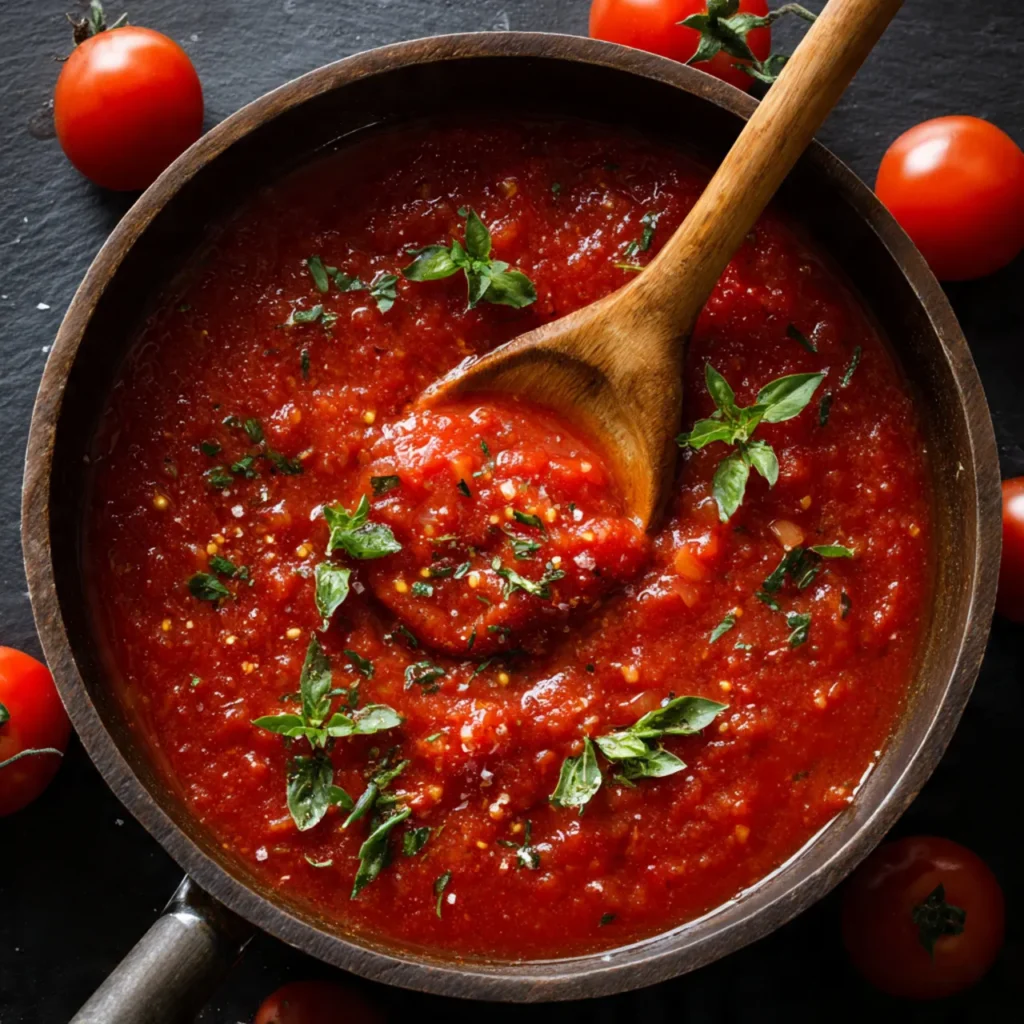
Tomato Marinara Sauce is one of the most iconic and versatile sauces in Italian cuisine. With its deep red color, rich aroma, and perfectly balanced flavor, it’s the foundation of countless dishes—from pasta and pizza to seafood and meatballs. At its core, marinara is a simple sauce made from ripe tomatoes, garlic, olive oil, and herbs, yet its simplicity is what makes it so extraordinary. When prepared with care, it transforms even the most basic ingredients into a meal that feels comforting, rustic, and full of soul.
The origins of marinara sauce trace back to southern Italy, particularly Naples, where it was first created by sailors returning from long voyages. The word “marinara” comes from “marinaro,” meaning “of the sea,” though the sauce itself contains no seafood. It was a practical recipe—easy to make, using ingredients that could be preserved on ships, such as tomatoes, olive oil, and dried herbs. Over time, it became a staple of Italian home cooking and eventually spread across the world, becoming a beloved classic in kitchens everywhere.
The Essence of Tomato Marinara Sauce
The beauty of marinara sauce lies in its simplicity. It doesn’t rely on heavy cream, butter, or complex techniques. Instead, it celebrates the natural sweetness and acidity of tomatoes, balanced by the warmth of garlic, the freshness of basil, and the richness of olive oil. The key is patience—allowing the sauce to simmer slowly so the flavors meld together into something greater than the sum of its parts.
A well-made marinara should be bright yet rich, smooth yet textured, and aromatic without being overpowering. It should coat pasta beautifully, complement pizza toppings, and serve as a flavorful base for countless Italian dishes.
Ingredients for Tomato Marinara Sauce
Core Ingredients
- 2 tbsp extra virgin olive oil
- 1 medium onion, finely chopped
- 4 cloves garlic, minced
- 2 cans (28 oz each) whole peeled tomatoes or 2 lbs fresh ripe tomatoes
- 1 tsp salt (adjust to taste)
- ½ tsp black pepper
- 1 tsp sugar (optional, to balance acidity)
- 1 tsp dried oregano
- 1 tsp dried basil or a handful of fresh basil leaves
- ½ tsp red pepper flakes (optional, for a hint of heat)
Optional Additions for Depth
- 1 tbsp tomato paste for richer flavor
- ½ cup red wine for complexity
- 1 bay leaf for subtle aroma
- 1 tbsp butter for a silky finish
Garnish and Serving
- Fresh basil or parsley
- Grated Parmesan cheese (optional)
Step 1: Preparing the Tomatoes
If using canned tomatoes, choose high-quality San Marzano or Italian plum tomatoes for the best flavor. These tomatoes are naturally sweet and low in acidity, making them ideal for sauces. Crush them by hand or with a blender for a smoother texture.
If using fresh tomatoes, blanch them in boiling water for 30 seconds, then transfer to an ice bath. Peel off the skins, remove the cores, and crush or chop them. Fresh tomatoes give the sauce a lighter, more delicate flavor, while canned tomatoes provide a deeper, more consistent taste.
Step 2: Sautéing the Aromatics
Heat the olive oil in a large saucepan over medium heat. Add the chopped onion and cook until translucent, about 5 minutes. Stir in the minced garlic and cook for another 30 seconds, just until fragrant. Be careful not to let the garlic brown, as it can turn bitter.
This step forms the flavor base of the sauce. The combination of olive oil, onion, and garlic creates a rich, aromatic foundation that enhances the natural sweetness of the tomatoes.
Step 3: Building the Sauce
Add the crushed tomatoes to the pan, along with salt, pepper, oregano, and red pepper flakes if using. Stir well to combine. If the sauce tastes too acidic, add a teaspoon of sugar to balance it. For a deeper flavor, stir in tomato paste and a splash of red wine.
Bring the sauce to a gentle simmer, then reduce the heat to low. Let it cook uncovered for 30–45 minutes, stirring occasionally. As it simmers, the sauce will thicken, and the flavors will deepen. If it becomes too thick, add a splash of water or broth to adjust the consistency.
Step 4: Finishing Touches
Once the sauce has reached the desired consistency, remove it from the heat. Stir in fresh basil leaves and a tablespoon of butter if desired for extra richness. Taste and adjust the seasoning with more salt or pepper as needed.
For a smoother sauce, use an immersion blender to puree it directly in the pot. For a chunkier texture, leave it as is.
Step 5: Serving the Marinara
Tomato Marinara Sauce is incredibly versatile. It can be served immediately or stored for later use. Toss it with spaghetti for a classic Italian meal, spoon it over chicken or eggplant Parmesan, or use it as a base for lasagna, pizza, or baked ziti. It also makes an excellent dipping sauce for garlic bread, mozzarella sticks, or fried calamari.
Flavor Profile and Texture
A perfect marinara sauce should have a balance of sweetness, acidity, and savoriness. The tomatoes provide natural sweetness and tang, the garlic and onion add depth, and the herbs bring freshness. The olive oil ties everything together, giving the sauce a silky texture and a subtle richness.
The texture can vary depending on preference—some prefer a smooth, velvety sauce, while others enjoy a rustic, chunky version. Either way, the key is to let the sauce simmer long enough for the flavors to meld and the tomatoes to break down naturally.
Variations and Creative Twists
1. Classic Italian Marinara: The traditional version with tomatoes, garlic, olive oil, and basil.
2. Spicy Arrabbiata: Add extra red pepper flakes or chopped chili for a fiery kick.
3. Roasted Tomato Marinara: Roast fresh tomatoes, garlic, and onions before blending for a smoky, caramelized flavor.
4. Wine-Infused Marinara: Add red or white wine for depth and complexity.
5. Vegetable Marinara: Add finely chopped carrots, celery, and bell peppers for extra sweetness and nutrition.
6. Creamy Marinara: Stir in a splash of cream or mascarpone for a luxurious texture.
7. Mushroom Marinara: Sauté mushrooms with the onions for an earthy, umami-rich sauce.
Tips for Perfect Tomato Marinara Sauce
1. Use quality tomatoes: The flavor of the sauce depends heavily on the quality of the tomatoes. San Marzano or vine-ripened tomatoes are ideal.
2. Don’t rush the simmer: Slow cooking allows the flavors to develop fully.
3. Balance acidity: A pinch of sugar or a small carrot grated into the sauce can help balance the acidity of the tomatoes.
4. Use fresh herbs: Add fresh basil or parsley at the end for a burst of freshness.
5. Avoid overcooking garlic: Burnt garlic can ruin the flavor of the sauce.
6. Adjust consistency: If the sauce is too thick, add a bit of water or broth; if too thin, simmer longer.
Serving Suggestions
Tomato Marinara Sauce is one of the most versatile sauces in the culinary world. It pairs beautifully with:
- Pasta: Spaghetti, penne, rigatoni, or linguine.
- Pizza: Use as a base for Margherita or pepperoni pizza.
- Seafood: Serve with shrimp, mussels, or calamari for a coastal Italian dish.
- Meatballs: Classic Italian meatballs in marinara sauce are a family favorite.
- Eggplant or Chicken Parmesan: Layer the sauce with breaded cutlets and cheese for a comforting meal.
- Dipping Sauce: Perfect for garlic bread, mozzarella sticks, or arancini.
Storage and Make-Ahead Tips
Marinara sauce stores beautifully, making it perfect for meal prep. Allow the sauce to cool completely before transferring it to airtight containers. It can be refrigerated for up to 5 days or frozen for up to 3 months.
To reheat, warm the sauce gently on the stove over low heat, adding a splash of water if it has thickened too much. Avoid microwaving for long periods, as it can alter the texture.
Nutritional Information (per serving, approximate)
- Calories: 120 kcal
- Protein: 2 g
- Fat: 7 g
- Carbohydrates: 12 g
- Fiber: 3 g
- Sugar: 7 g
This sauce is naturally low in fat and calories, making it a healthy addition to any meal. It’s also vegan, gluten-free, and packed with antioxidants from the tomatoes.
Why This Recipe Stands Out
Tomato Marinara Sauce stands out because it captures the essence of Italian cooking—simple ingredients, prepared with care, yielding extraordinary flavor. It’s a recipe that anyone can master, yet it never fails to impress. The slow simmering process brings out the natural sweetness of the tomatoes, while the garlic and herbs add depth and aroma.
This sauce is also endlessly adaptable. It can be made in large batches, customized with different herbs or spices, and used in countless dishes. It’s a staple that every home cook should have in their repertoire.
Pairing Ideas
1. Beverages: Pair with red wines like Chianti or Sangiovese, or a crisp white like Pinot Grigio.
2. Side Dishes: Serve with garlic bread, caprese salad, or roasted vegetables.
3. Sauces: Combine with béchamel for lasagna or with cream for a rosé sauce.
The History of Marinara Sauce
Marinara sauce has deep roots in Italian culinary tradition. It’s believed to have originated in Naples in the 16th century, shortly after tomatoes were introduced to Europe from the Americas. Sailors’ wives would prepare the sauce quickly upon their husbands’ return from sea, using pantry staples like tomatoes, garlic, and olive oil.
Over time, marinara became a cornerstone of Italian cuisine, symbolizing the simplicity and freshness that define Mediterranean cooking. When Italian immigrants brought their recipes to America, marinara evolved further, becoming a staple in Italian-American dishes like spaghetti and meatballs.
The Art of the Perfect Marinara
The secret to a perfect marinara lies in patience and balance. The sauce should simmer slowly, allowing the tomatoes to break down and the flavors to meld. The garlic should be fragrant but not overpowering, and the herbs should enhance rather than dominate.
The texture should be smooth enough to coat pasta but thick enough to cling to a spoon. The flavor should be bright, rich, and comforting—a true taste of Italy in every bite.
A Sauce for All Seasons
Tomato Marinara Sauce is a year-round staple. In summer, it’s perfect with fresh tomatoes and basil. In winter, it brings warmth and comfort to hearty dishes like baked pasta or meatballs. Its versatility makes it suitable for everything from quick weeknight dinners to elegant dinner parties.
The Perfect Entertaining Sauce
This sauce is ideal for entertaining because it can be made ahead and used in multiple dishes. Serve it as part of a pasta bar, use it as a dipping sauce for appetizers, or incorporate it into baked dishes for a crowd. Its rich aroma and vibrant color make it a centerpiece of any meal.
Conclusion
Tomato Marinara Sauce is more than just a recipe—it’s a symbol of Italian culinary tradition, a celebration of simplicity, and a testament to the power of good ingredients. With its rich tomato flavor, aromatic herbs, and silky texture, it transforms everyday meals into something special.
Whether tossed with pasta, spread on pizza, or served as a dipping sauce, marinara brings warmth and authenticity to the table. It’s a sauce that connects generations, cultures, and kitchens around the world. Each spoonful tells a story of tradition, patience, and love—a story that continues every time it’s made from scratch.